The following is part of a recurring series of Q&As with NJCRC partners highlighting their work, perspectives on coastal resilience issues, and views on how the collaborative can help. In this edition we caught up with NJCRC Co-Chair Martha Maxwell-Doyle, who serves as the Programs Director at the Partnership for the Delaware Estuary.
Can you tell us about your background and how you first became interested in coastal resilience issues?
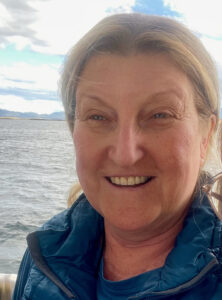
I have lived my entire life along the Mullica River in Sweetwater, Atlantic County, where I have witnessed changes in how the river is used and the growing effects of climate change and sea-level rise. Environmental protection has been a consistent focus throughout my career, which has spanned natural resource management and monitoring, law enforcement, hazardous materials response, climate resilience, and risk mitigation. Together, these experiences have given me a unique perspective on the complex challenges of adapting to a changing climate.
What kind of work do you do at the Partnership for the Delaware Estuary (PDE)?
For the past 15 years, I have focused on the impacts of climate change on estuarine and coastal ecosystems. As a founding member of the Mid-Atlantic Coastal Wetlands Assessment collaborative, I helped establish a systematic framework for monitoring and assessing the condition, vulnerability, and long-term sustainability of coastal wetlands. Today, PDE’s science staff continues this important work through its leadership and participation in the New Jersey Tidal Wetlands Monitoring Network.
In my current role as Programs Director for the Partnership for the Delaware Estuary (PDE), I work closely with our talented staff and partners to identify and advance opportunities that support implementation of the Delaware Estuary Program’s Comprehensive Conservation and Management Plan (CCMP). PDE serves as the host organization for the Delaware Estuary Program, one of 28 National Estuary Programs established under Section 320 of the U.S. Clean Water Act.
As a lifelong New Jersey resident, I also draw upon leadership and advisory roles with the New Jersey Climate Resilience Collaborative (NJCRC), the New Jersey Climate Change Resource Center, the New Jersey Tidelands Resource Council, the New Jersey Tidal Wetlands Monitoring Network, and the New Jersey Nongame and Endangered Species Advisory Council. These roles help strengthen PDE’s partnerships throughout New Jersey and provide valuable opportunities to advance collaborative, science-based approaches to climate adaptation, coastal resilience, and ecosystem stewardship across the region.
How does your organization’s mission and needs connect with the NJCRC?
As a National Estuary Program, we recognize that climate change must be considered in everything we do if we are to successfully achieve our implementation goals. Our Comprehensive Conservation and Management Plan (CCMP) is built around four core pillars: Clean Waters: reducing pollution, strengthening water quality, and ensuring sustainable water resources for future generations; Strong Communities: expanding public access, enhancing resilience to climate impacts, and empowering residents to serve as environmental stewards; Healthy Habitats: protecting and restoring wetlands, forests, shellfish populations, and other natural systems that support biodiversity and improve water quality and a strong Education and Engagement program that integrating community involvement throughout all CCMP activities. These strategies are grounded in the best available science and guide the collaborative decision-making process of the partners who make up the Estuary Program’s leadership and our staff. PDE staff continually seek innovative approaches to implementing nature-based climate resilience solutions, whether through wetland restoration, living shorelines, or other forms of green infrastructure.
Many of my colleagues within the New Jersey Coastal Resilience Collaborative (NJCRC) have been valued partners for years. By working together, we can leverage a diverse range of expertise, experience, and perspectives to address increasingly complex challenges. I strongly believe that the NJCRC network is a critical asset to the State of New Jersey as it advances climate adaptation and resilience efforts, helping communities prepare for and respond to the impacts of a changing climate. This is an amazing accomplishment since NJCRC is an all-volunteer network that has over the years received indirect funding that has supported a parttime backbone staff. It clearly demonstrates the dedication of our members to make New Jersey as resilient to climate change as possible.
Has being a member of the NJCRC benefited you and your work?
Absolutely. Many of my colleagues were already working together, and the NJCRC has given us a formal network while bringing more professionals across New Jersey into the conversation. The technical information shared on NJCRC’s website is an invaluable resource, whether through the Directory of Technical Advisors, the extensive Resource Library, or the work of the various Work Groups. The Work Groups can identify challenges and needs and propose solutions to address them.
What is your favorite place on the New Jersey coast and why?
I may be biased, but my favorite place is the Mullica River watershed. I grew up on these waters: running my little Jon boat as a kid, mucking in the mud, kayaking the Mullica and Batsto Rivers, fishing off the dock or in Great Bay, and water skiing competitively, which took my family around the country. Even now, there is nothing better than sitting on the dock with a favorite beverage, going for a swim and relaxing. The cedar waters of the Mullica will always run through my blood and be my home, and it is a truly special place.